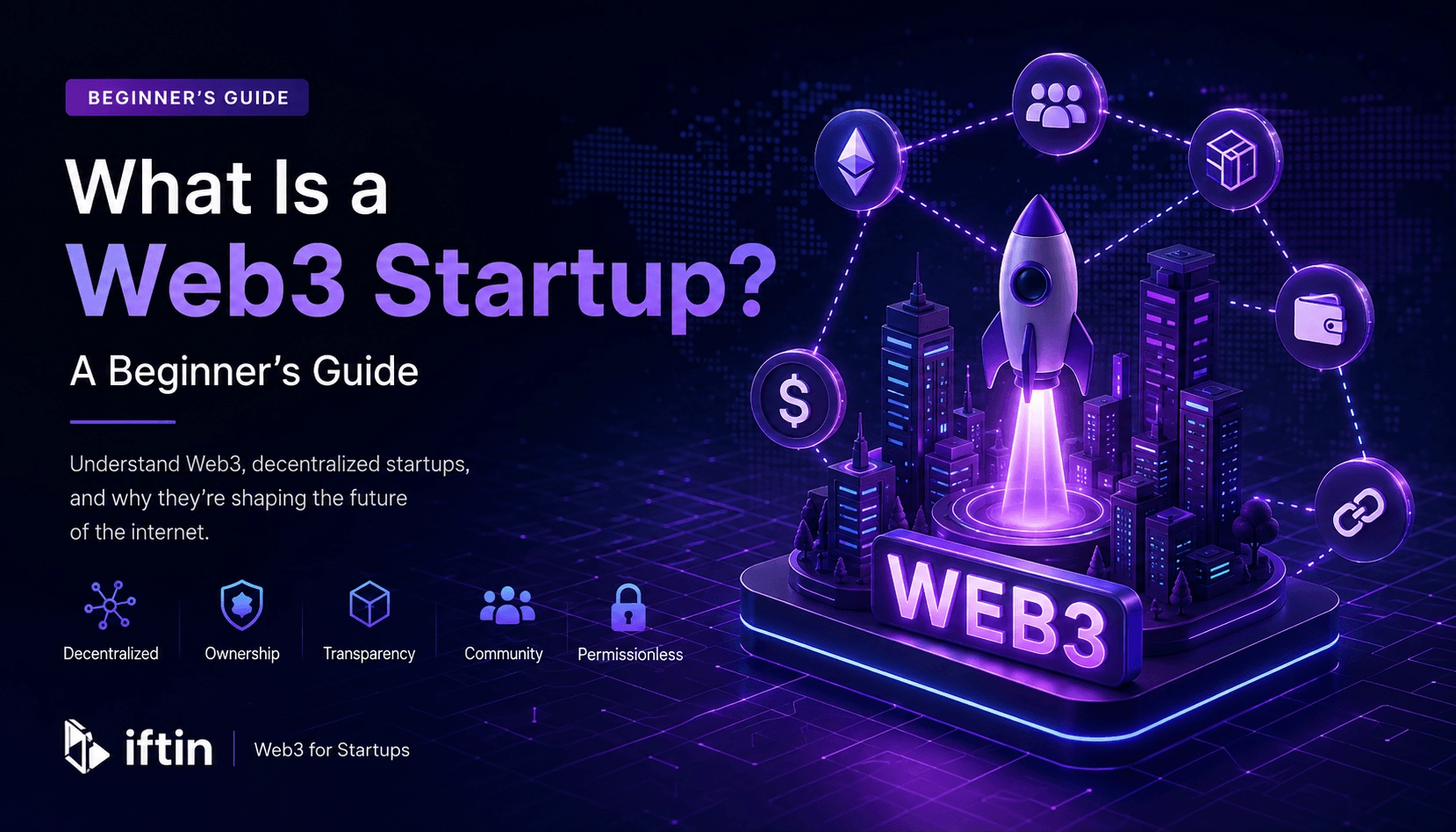
If you’ve been paying attention to the tech world lately, you’ve probably heard the term Web3 thrown around — sometimes excitedly, sometimes skeptically. But what does it actually mean? And what makes a startup “Web3”?
This guide breaks it all down, whether you’re a curious newcomer or a developer thinking about building your first decentralized product.
What Is Web3?
Before we talk about startups, let’s get the foundation right.
The internet has gone through phases. Web1 was static — you read pages, couldn’t interact much. Web2 brought interactivity — social media, apps, platforms like Google and Facebook where users create content. But here’s the catch: in Web2, the platforms own everything. Your data, your content, your digital identity — it all belongs to a company.
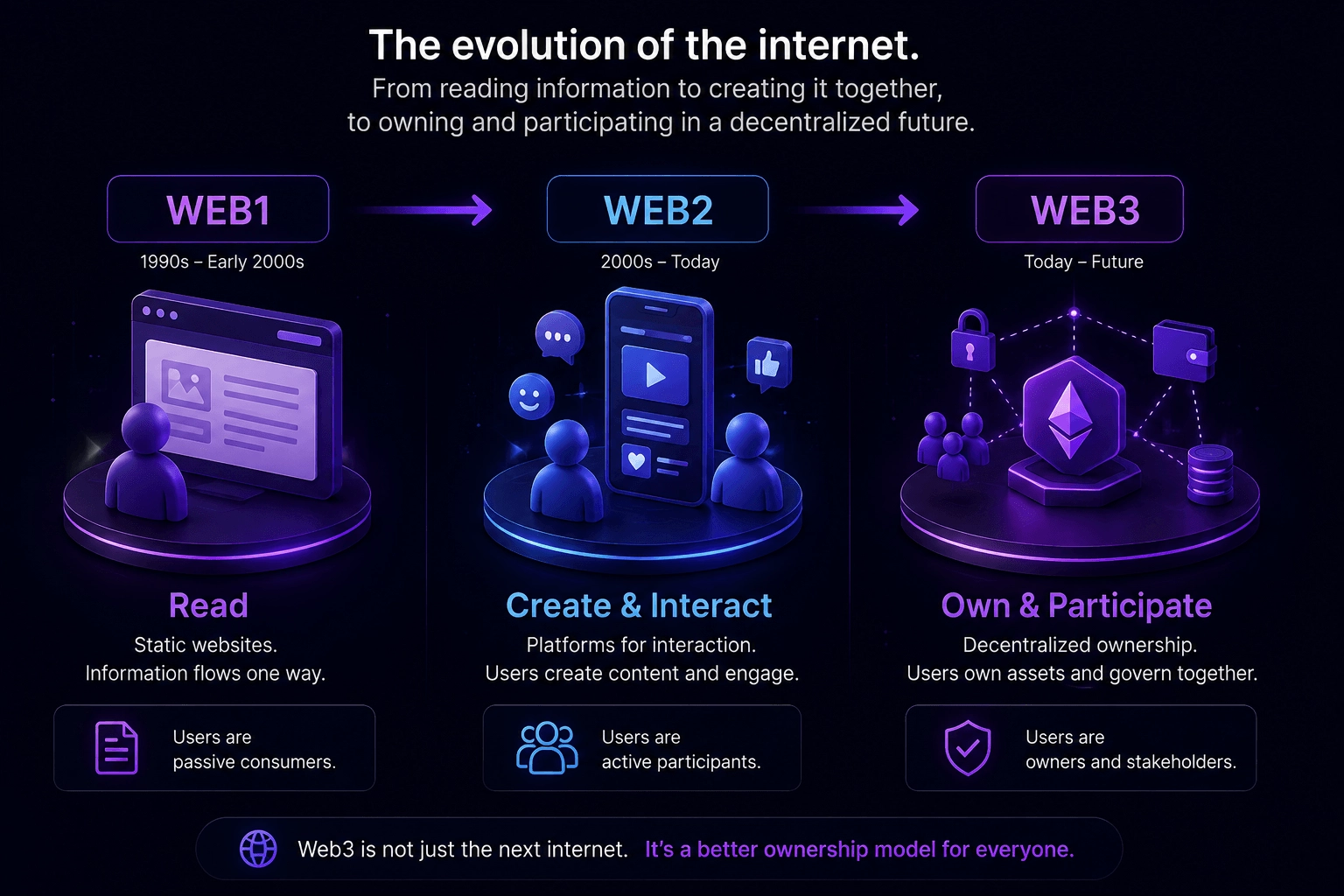
Web3 is the next phase. It’s built on blockchain technology, meaning no single company controls the network. Instead, ownership is distributed among users. Think of it this way: in Web2, you rent space on someone else’s platform. In Web3, you own a piece of the infrastructure itself.
Key characteristics of Web3:
- Decentralization — No central authority controls the data
- Ownership — Users own their assets via wallets and tokens
- Transparency — Transactions are verifiable on public blockchains
- Permissionless — Anyone can participate without asking permission
A Web3 startup is a company — or increasingly, a community — building products and services on decentralized infrastructure.
But here’s what makes Web3 startups fundamentally different from traditional tech startups: the business model itself is reimagined.
In a traditional startup, the company captures value. Users generate content or data, and the company monetizes it. In a Web3 startup, value flows back to the community. Early users can become token holders — meaning they’re not just customers, they’re stakeholders.
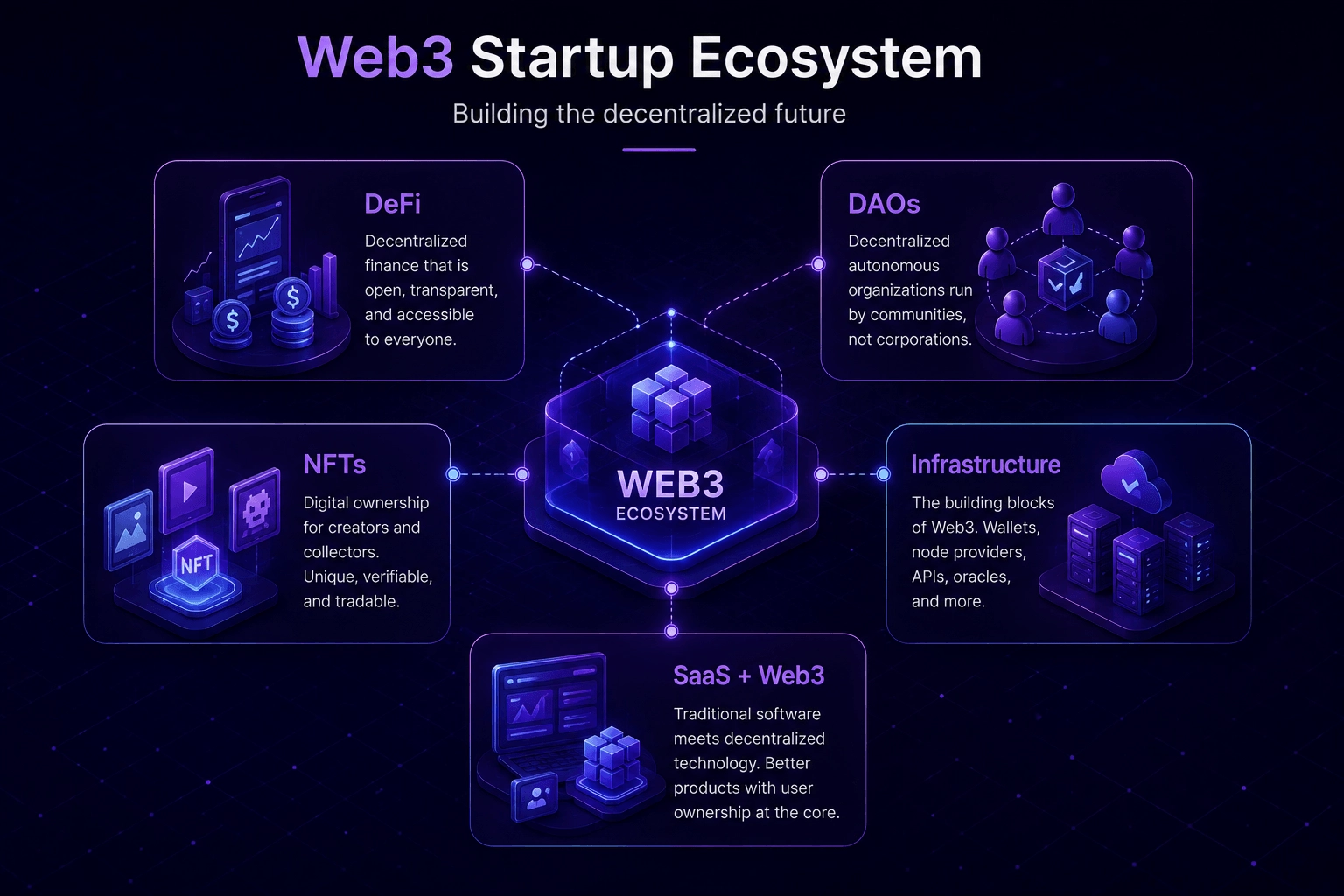
Some real-world examples of Web3 startup categories:
- DeFi (Decentralized Finance) — Platforms like Uniswap or Aave that let you lend, borrow, and trade without banks
- DAOs (Decentralized Autonomous Organizations) — Internet-native organizations governed by token holders through on-chain voting
- NFT Platforms — Marketplaces and tools for digital ownership and creator economies
- Web3 Infrastructure — Projects building the “picks and shovels” — wallets, node providers, developer tools
- SaaS + Web3 Hybrids — Traditional software products that integrate blockchain for payments, identity, or data ownership
Why Are Web3 Startups Growing So Fast?
Three forces are driving this growth right now.
First, trust is broken. High-profile data breaches, platform deplatforming, and surveillance capitalism have pushed users toward alternatives where they control their own data. Web3 offers a credible alternative architecture.
Second, the tooling has matured. Building a Web3 product in 2021 was painful. Smart contract audits were expensive, wallets were confusing, and onboarding users was nearly impossible. In 2026, the developer experience has improved dramatically. Tools like Hardhat, Wagmi, and RainbowKit have made building and connecting wallets almost as smooth as traditional web development.
Third, the talent is here. A generation of developers who grew up on Ethereum, Solana, and Cosmos are now building full-time. The ecosystem has depth it simply didn’t have five years ago.
What Makes a Web3 Startup Succeed?
This is where it gets honest.
Most Web3 startups fail — not because the technology is bad, but because they mistake decentralization theater for actual product value. Slapping a token on a product that doesn’t need one isn’t a Web3 startup. It’s a gimmick.
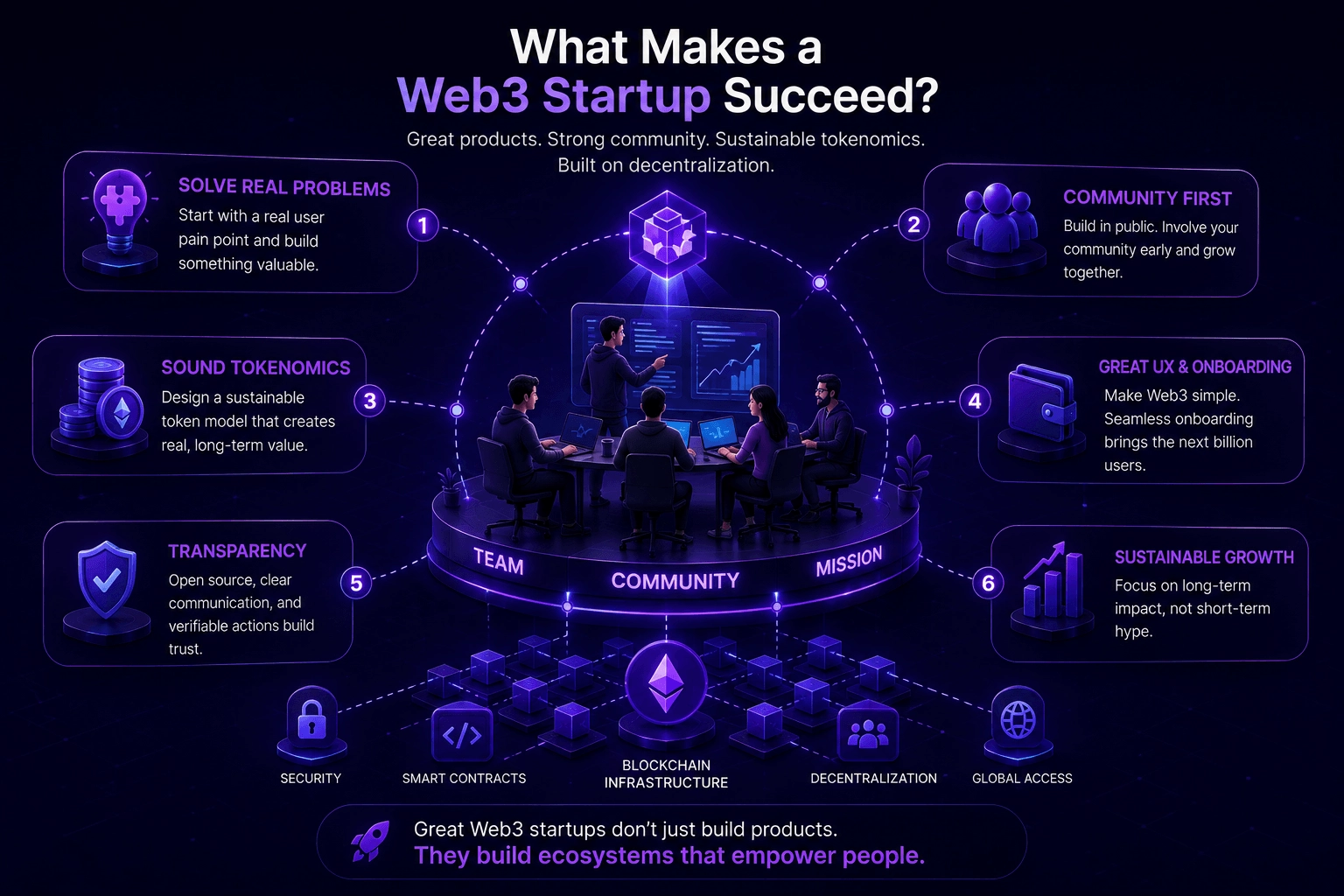
The Web3 startups that succeed share a few traits:
1. They solve a real problem. The best projects start with a genuine user pain point — not “how do we use blockchain” but “why do users lose their assets when platforms shut down?” or “why do creators get 1% of the value they generate?”
2. They build for their community early. Unlike traditional startups that build in private, Web3 startups often develop in public — sharing roadmaps, inviting early governance participation, and building trust before they ship.
3. They understand tokenomics. A token is a tool, not a fundraising mechanism. The strongest projects design their token economy so that holding and using the token creates genuine, sustainable value — not just speculative demand.
4. They obsess over onboarding. The biggest UX challenge in Web3 is still getting non-crypto users to connect a wallet, understand gas fees, and trust a smart contract they can’t read. Startups that nail onboarding win.
How Is a Web3 Startup Different from a Traditional Startup?
| Traditional Startup | Web3 Startup | |
|---|---|---|
| Ownership | Founders + VCs | Community + Token Holders |
| Funding | Seed rounds, Series A | Token sales, grants, DAOs |
| Governance | Board decisions | On-chain voting |
| Revenue | Subscription, ads | Protocol fees, treasury |
| Exit | Acquisition or IPO | Token liquidity, protocol maturity |
Neither model is universally better. But for certain products — especially those where trust, censorship resistance, or community ownership matter — the Web3 model has structural advantages that are hard to replicate with traditional infrastructure.
Is Now a Good Time to Build a Web3 Startup?
Honestly? Yes — with caveats.
The market cycles of crypto are real. Valuations inflate, then correct, then inflate again. But the underlying technology keeps improving regardless of price. The builders who built during the 2022-2023 bear market shipped some of the most important infrastructure in the space.
If you’re thinking about building:
- Start with the problem, not the token
- Learn Solidity or Rust — the smart contract languages that power most of the ecosystem
- Get familiar with Ethereum’s developer docs or Solana’s documentation
- Follow builders, not speculators — Twitter/X and Farcaster are where the real conversations happen
The Bottom Line
Web3 startups aren’t just a trend. They represent a genuine architectural shift in how software can be built, owned, and governed. Like all paradigm shifts, the path is messy — full of failed experiments, overhyped projects, and real breakthroughs happening quietly in the background.
The best Web3 startups aren’t trying to decentralize everything. They’re asking a simpler question: where does removing the middleman actually create more value for users? When they find that answer, they build something worth using.
And that’s always been what good startups do.