-

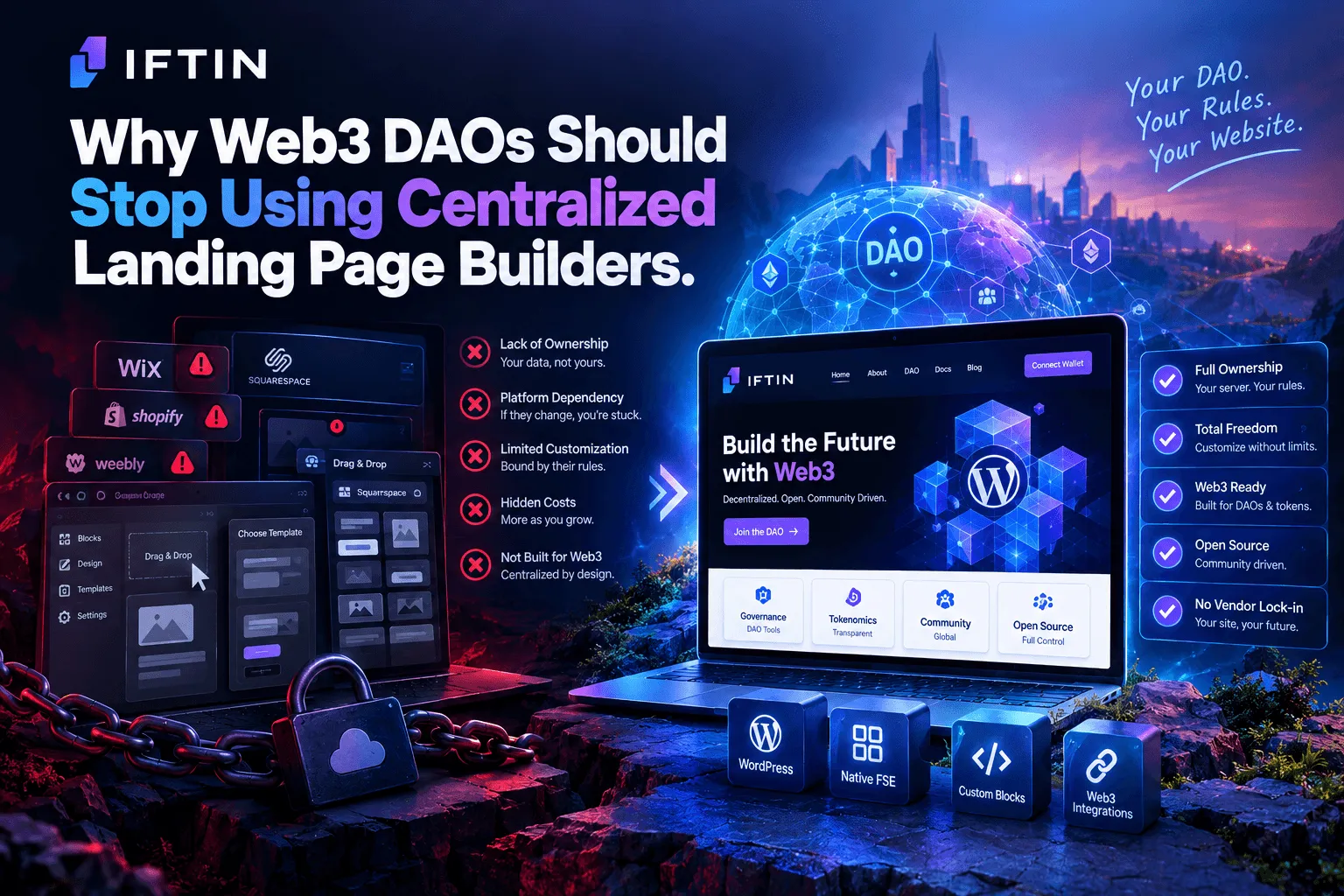
Why Web3 DAOs Should Stop Using Centralized Landing Page Builders
There’s a specific kind of cognitive dissonance when Web3 DAOs rely on centralized landing page builders, and it’s worth naming directly. A DAO spends eighteen months designing a governance system where no single party can freeze funds. It audits its smart contracts. It distributes its multisig across five continents. It writes a constitution enshrining the…
-
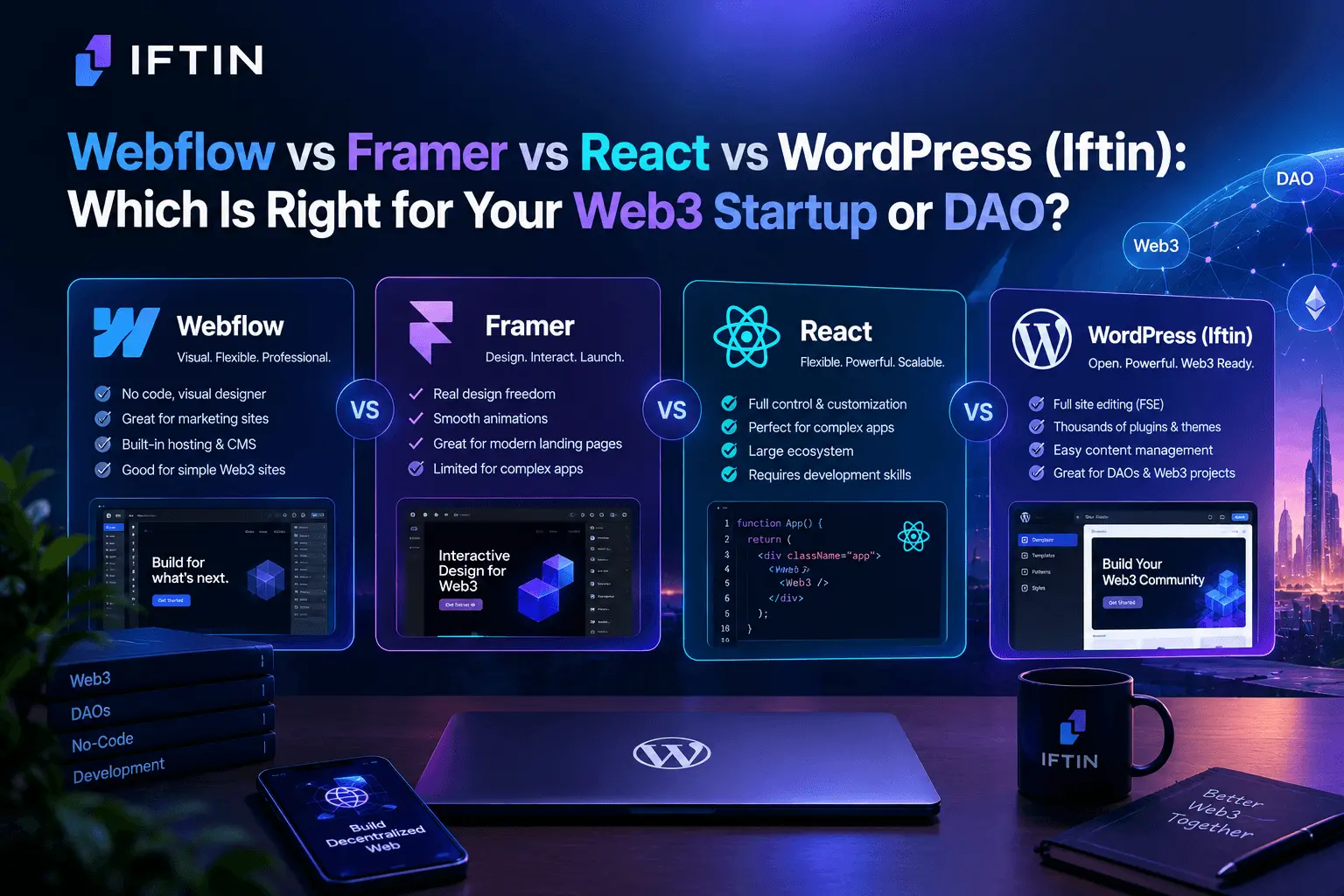
Webflow vs Framer vs React vs WordPress (Iftin): Which Is Right for Your Web3 Startup or DAO?
When comparing Webflow vs Framer vs React vs WordPress, every Web3 team eventually faces the same decision: what do we build the website on? The options feel straightforward until you start asking the questions that actually matter for a decentralized organization. Can this platform be taken offline by a third party? Who owns the content…
-
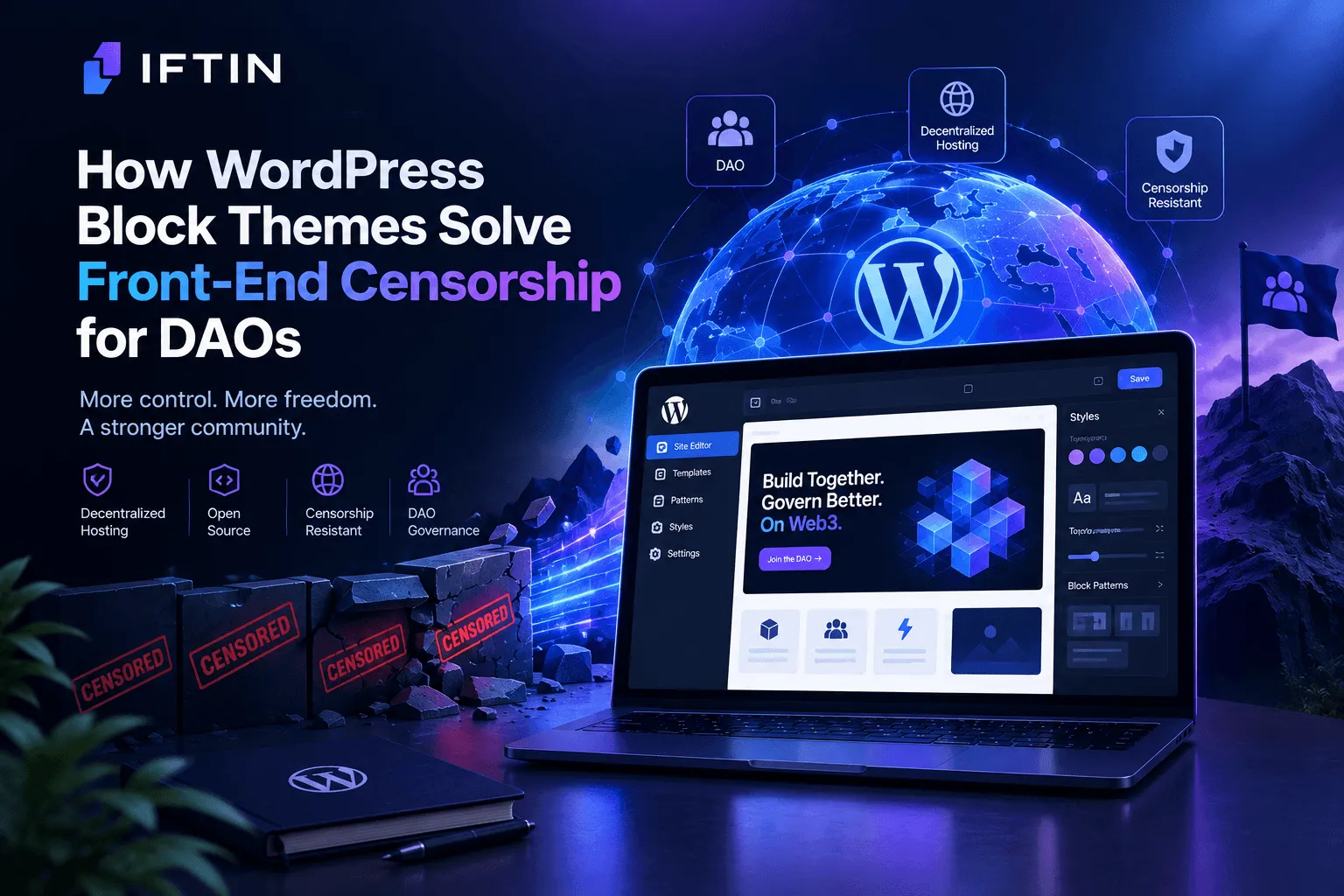
How WordPress Block Themes Solve Front-End Censorship for DAOs
In late 2023, the front end of Tornado Cash — one of the most widely used privacy protocols on Ethereum — was taken offline. The smart contracts kept running. The protocol itself was untouched. But the website that let ordinary users interact with it was gone, and the domain was seized. This wasn’t an isolated…
-
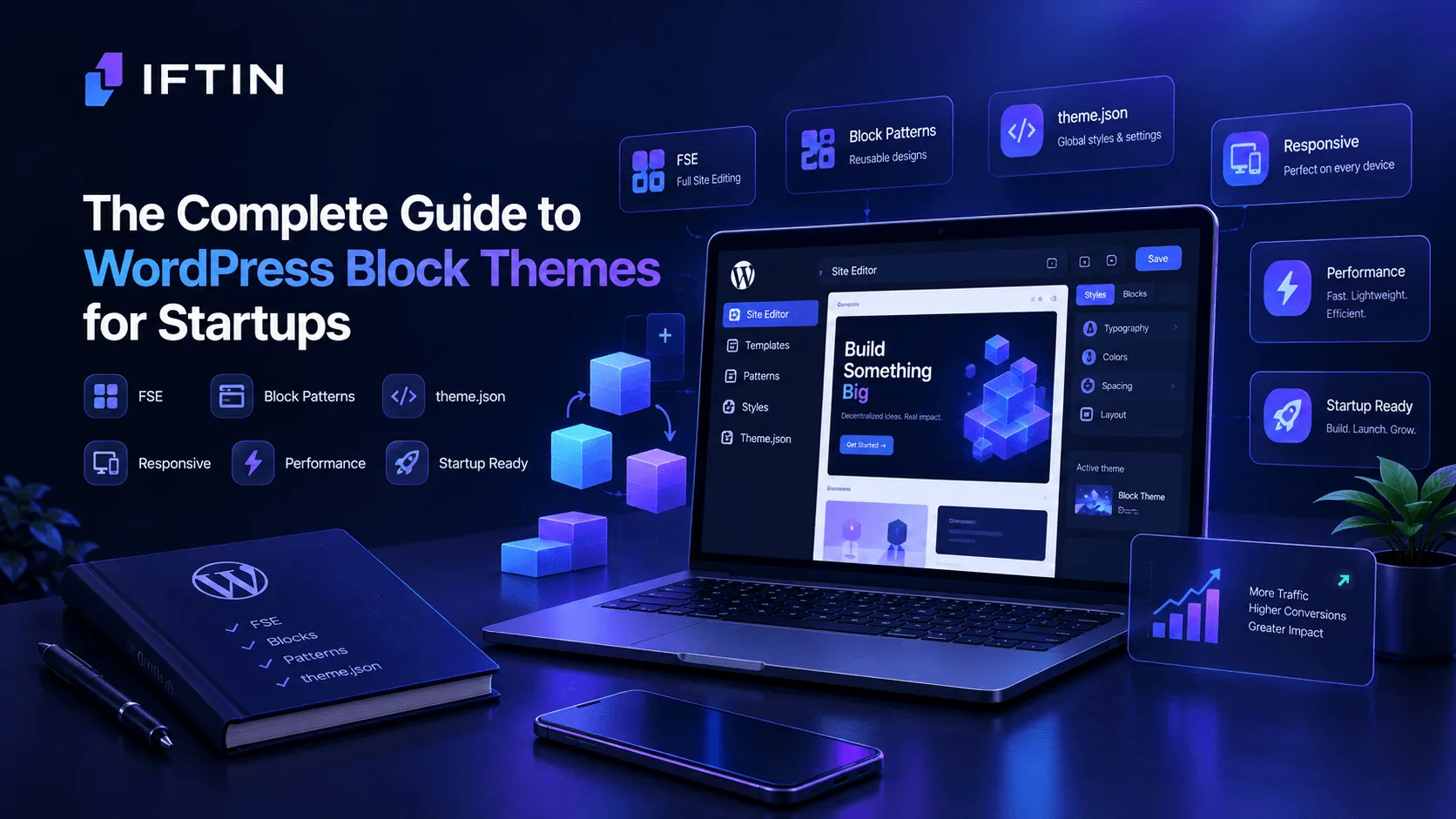
The Complete Guide to WordPress Block Themes for Startups
The way WordPress themes work has changed fundamentally. Most startup teams haven’t caught up with what that change actually means for how they build and maintain their websites. The classic WordPress model — a theme that controls some things, a page builder that controls other things, a collection of plugins filling in the gaps, and…
-
Why Block Themes Are Perfect for Web3 Landing Pages
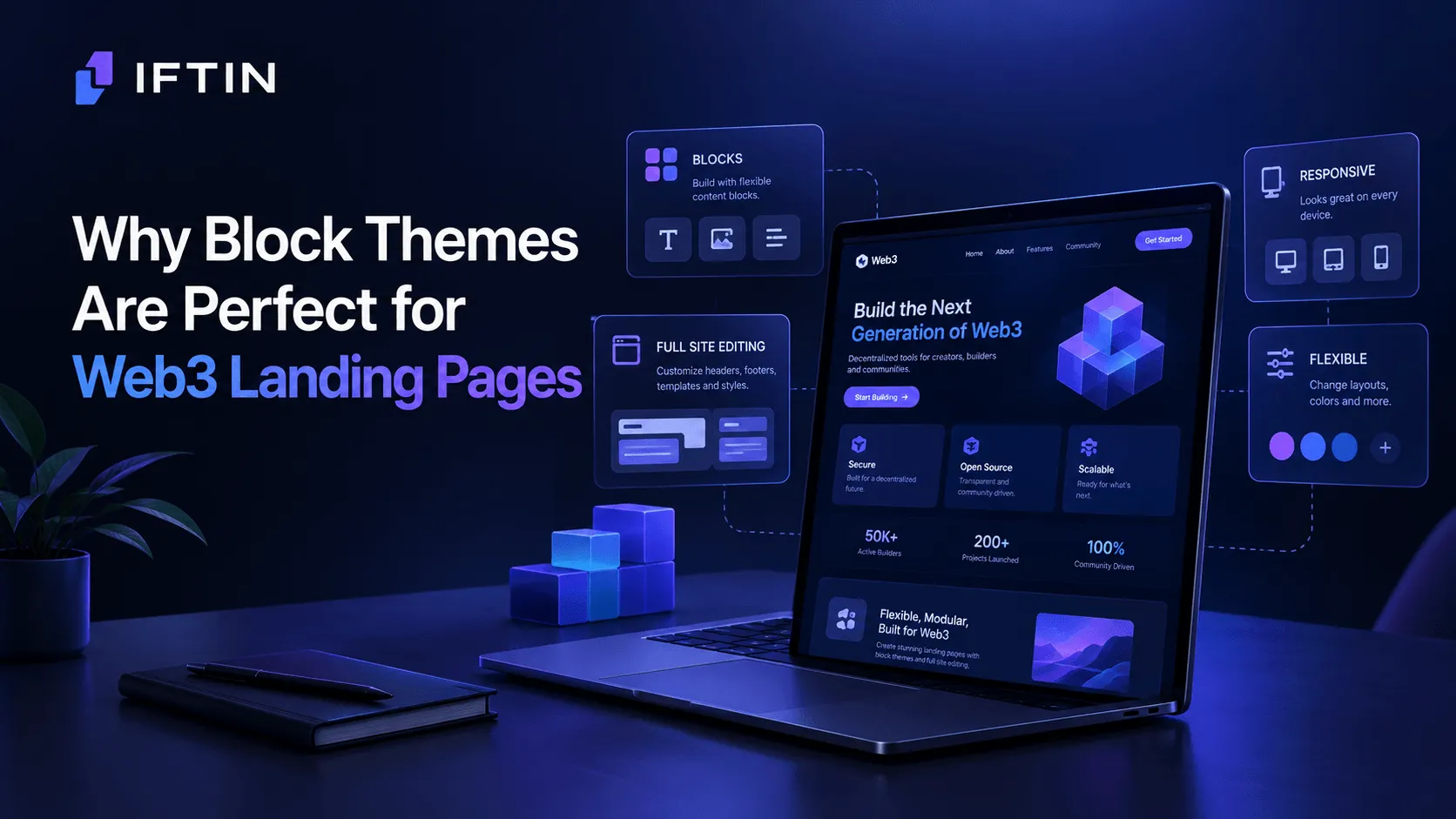
There’s a quiet mismatch happening in Web3 marketing. Projects spending millions on smart contract audits and token engineering will ship a landing page built on a drag-and-drop page builder from a decade ago — bloated with JavaScript, dependent on third-party servers, and impossible to version control. The technical credibility the product earns on-chain gets quietly…
-
DAO Website Design Best Practices
Most DAO websites look like they were designed by a committee that couldn’t agree on anything. That’s often literally what happened. DAOs make decisions collectively, and collective decision-making produces predictable design outcomes: pages that try to represent every working group equally, navigation structures that reflect internal organizational debates rather than visitor needs, and hero sections…
-
How to Design a High-Converting Token Launch Landing Page
Designing a token launch landing page requires a narrower focus than most Web3 pages. It’s not trying to explain your entire project. It’s not building brand awareness or educating the market about blockchain technology. It’s doing one thing: converting a skeptical visitor into someone who takes a specific action — joining a waitlist, completing KYC,…
-
Essential Pages Every Web3 Startup Website Needs
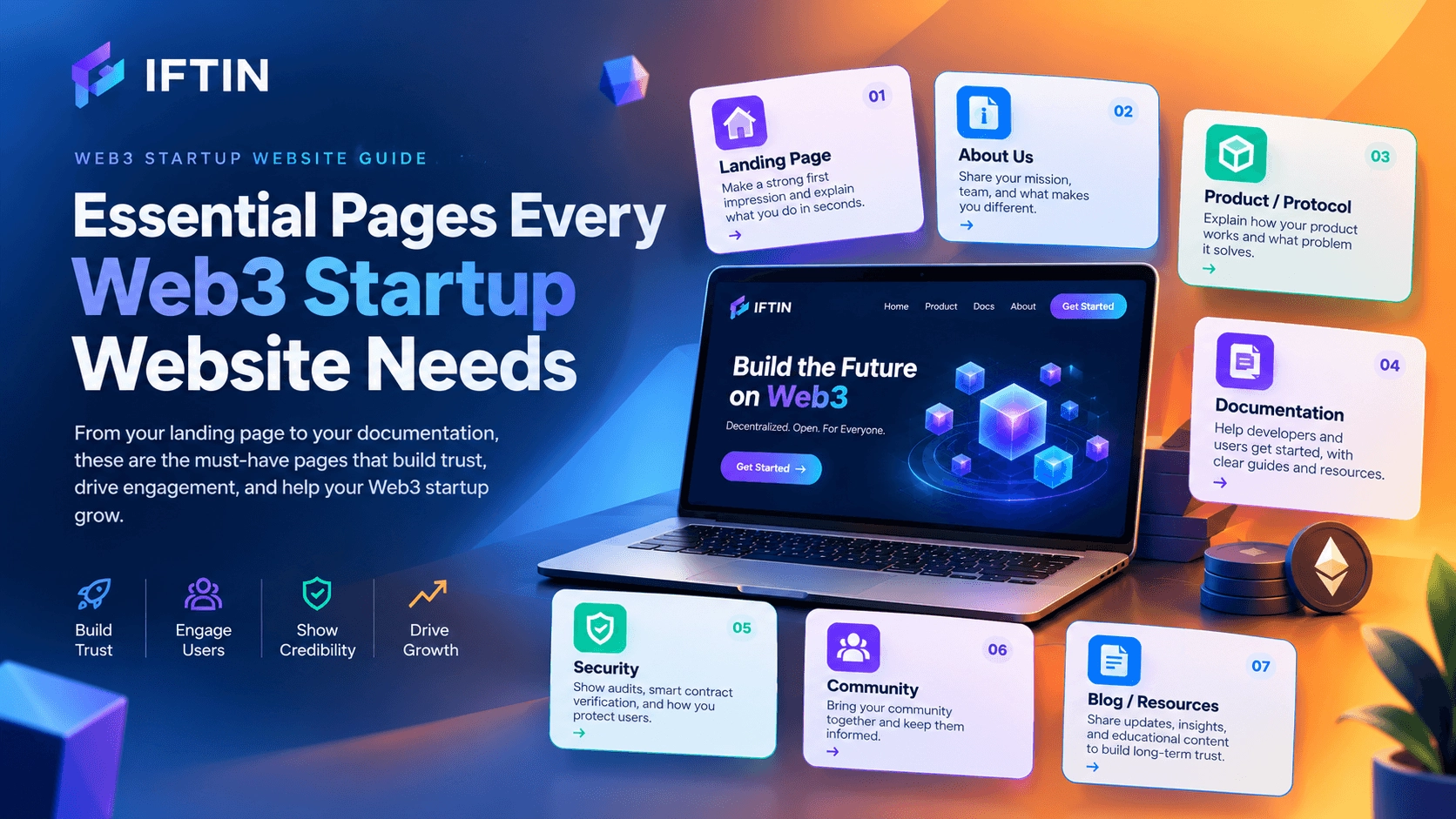
Most Web3 startups launch with a homepage and a whitepaper link. Sometimes a roadmap. Occasionally a blog that gets three posts before going silent. Then six months in, the questions start. Where do I find the tokenomics? How does governance work? Who built this? Is there documentation for developers? The information exists — somewhere in…
-
Startup Landing Page Best Practices for Web3 Projects
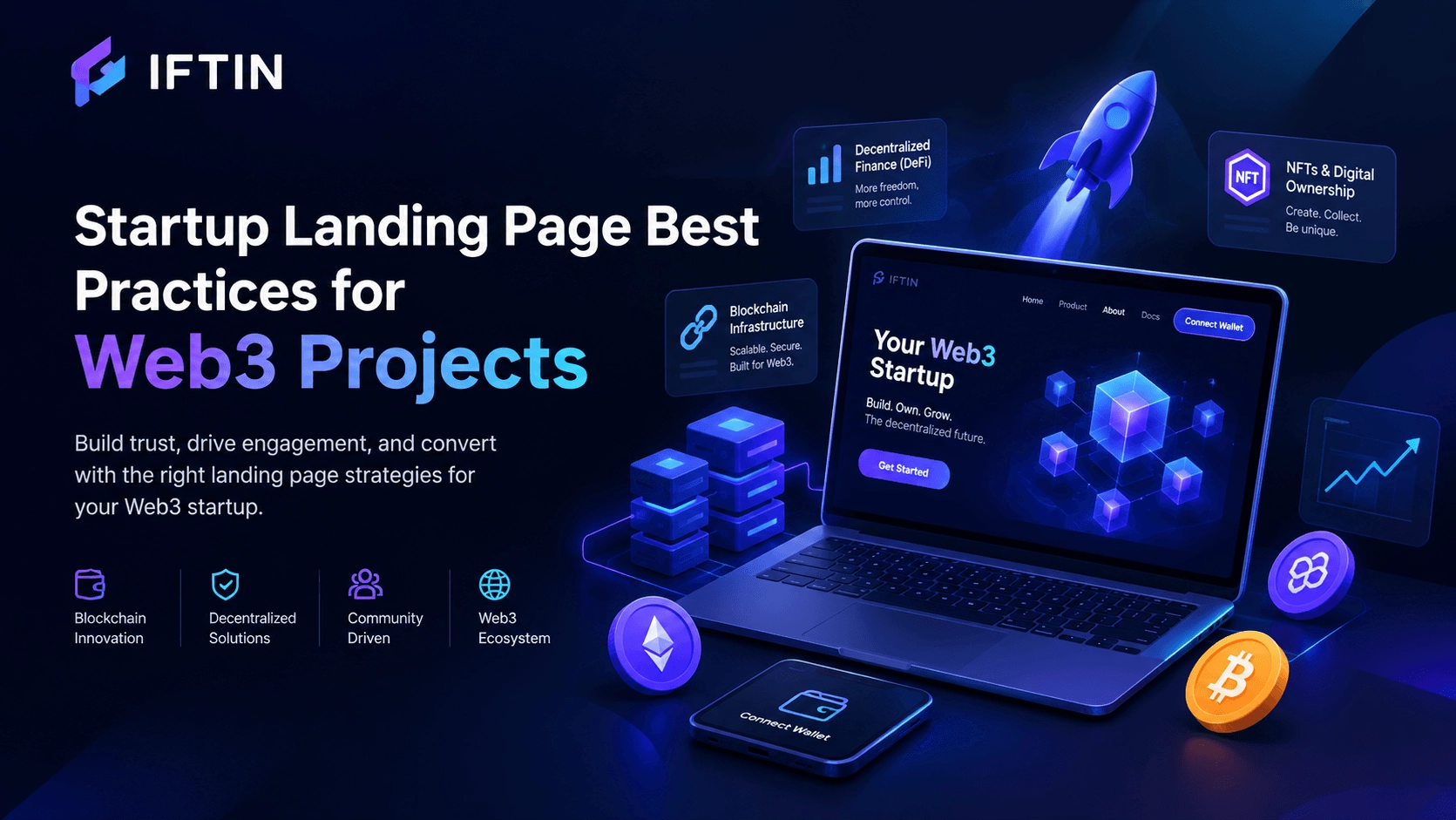
Most Web3 projects don’t have a conversion problem. They have a clarity problem. The landing page exists. The design is often striking — dark backgrounds, gradient accents, animated token visuals. But visitors land, spend twenty seconds reading, and leave without taking any action. Not because the product isn’t interesting. Because the page never told them…
-
WordPress FSE vs Classic Themes for Web3 Startups
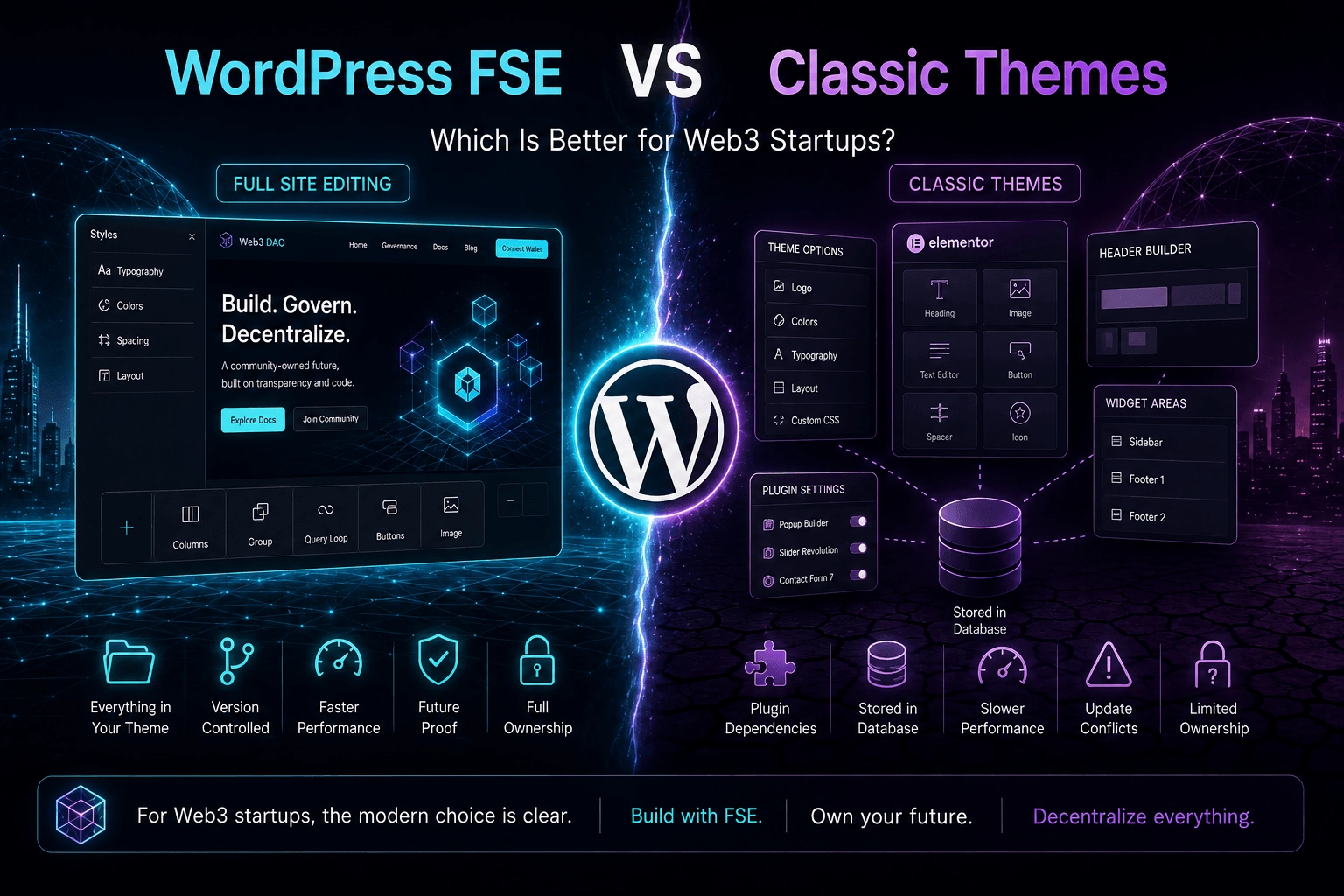
The debate usually starts with a practical question. A Web3 founder or developer needs a website. They know WordPress. They’re evaluating options and they keep running into two fundamentally different approaches: classic themes with page builders, and Full Site Editing with block themes. Both claim to solve the same problem. Both have advocates who speak…


IFTIN PRO
Sovereign, high-performance Full Site Editing theme engineered for Web3 startups & DAOs
🟢 All Systems Operational
© 2026 Amiin Maalik. All rights reserved. Built with digital sovereignty.