Most Web3 startups launch with a homepage and a whitepaper link. Sometimes a roadmap. Occasionally a blog that gets three posts before going silent.
Then six months in, the questions start. Where do I find the tokenomics? How does governance work? Who built this? Is there documentation for developers? The information exists — somewhere in a Discord pinned message, a Medium post from the launch week, a tweet thread that’s now buried under eighteen months of noise.
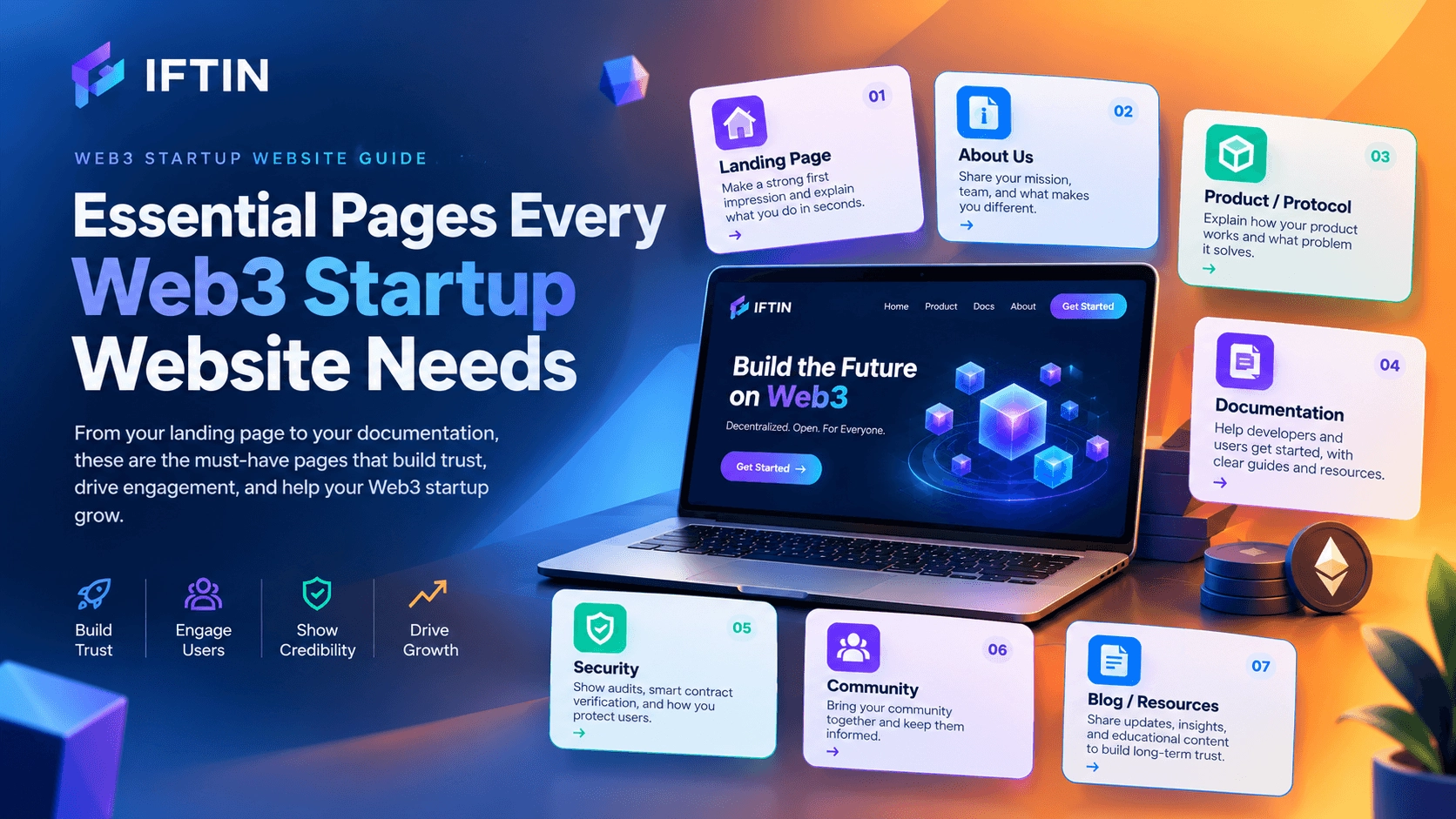
A well-structured Web3 website solves this before the questions get asked. This guide covers the pages every Web3 startup website actually needs, what each one should contain, and why the ones most teams skip are often the ones that matter most.
The Homepage
The homepage of a Web3 website has one job that most teams complicate: tell a first-time visitor what the project does, why it matters, and what to do next — in that order, in under ten seconds.
The failure mode is trying to do too much. DAOs that open with a 200-word mission statement. DeFi protocols that lead with a features list. NFT platforms that put the Discord invite before anything that explains what the platform actually is.
What the homepage needs above the fold: one sentence describing the product, one sentence naming who it’s for, and one call to action. Below the fold: how it works, why it’s different, social proof, and a repeated call to action.
What the homepage doesn’t need: a countdown timer that’s been running for four months past its end date, a “revolutionary” claim with nothing to back it up, or a token price ticker that goes red every time the market dips.
The homepage is the first impression for every category of visitor your project will ever have. Investors, developers, community members, journalists, and skeptics all land here first. Build it for clarity, not for the people who already believe.
About
The about page is where trust gets built or lost for visitors who made it past the homepage.
For a Web3 project, this page carries specific weight. The space has a well-documented history of anonymous founders, vaporware projects, and rug pulls. Visitors who are evaluating whether to use your protocol, contribute to your codebase, or hold your token are doing due diligence whether you call it that or not.
An effective Web3 about page covers three things: who built this and why, what the project is trying to accomplish at a meaningful level of specificity, and what makes this team credible to accomplish it.
The team section deserves particular attention. Headshots and LinkedIn links don’t build trust on their own. What builds trust is relevant context — previous protocols someone worked on, open source contributions that can be verified, research backgrounds that explain why this team has an edge on this specific problem.
Fully anonymous founding teams are a real phenomenon in Web3 and not inherently disqualifying. But anonymous teams need to work harder on every other credibility signal — audit history, on-chain track record, community governance participation — to compensate for the missing identity information.
Tokenomics
If your project has a token, this page is not optional. It’s the page that serious evaluators check before anything else, and it’s the page most teams build last and update least.
Tokenomics documentation needs to cover: total supply and how it’s determined, distribution breakdown by category with percentages and absolute numbers, vesting schedules for team and investor allocations, token utility and where value accrues, and the mechanism by which the token becomes more or less scarce over time.
Plain language matters here more than almost anywhere else on the site. The temptation is to write tokenomics documentation that sounds sophisticated — to use terms like “deflationary burn mechanism” and “protocol-owned liquidity” without explaining what they mean in practice. Resist this. The people who are most valuable to your project — serious developers, long-term holders, institutional allocators — can read technical documentation. They don’t need jargon. They need accuracy.
Update this page when things change. Tokenomics that were accurate at launch and haven’t been touched since are worse than no documentation, because they create false expectations that will eventually damage trust.
Roadmap

The roadmap page tells visitors where the project is going. More importantly, it tells them whether the team has a credible plan for getting there.
The version of the roadmap that doesn’t work: a graphic with four quarterly columns, each containing three-word items like “mainnet launch” and “exchange listing” and “ecosystem expansion,” with no context for how these things happen or what success looks like.
The version that does work: milestones with enough specificity to be falsifiable, organized by what the team controls rather than calendar dates where possible, with a clear indication of what’s complete, what’s in progress, and what’s planned.
Governance-driven projects have a particular challenge here. If your roadmap is determined by token holder votes rather than a founding team’s plan, say so. A roadmap page that explains “we prioritize based on governance proposals, here’s how that works and here are the active proposals” is more honest and often more compelling than a static list of features the team made up in a planning session.
The worst thing a roadmap can be is stale. A roadmap with milestones from eighteen months ago that never happened, still displayed as planned, is a trust problem that compounds over time. If you can’t keep the roadmap current, replace it with a governance forum link and an explanation of how priorities get set.
Documentation
Documentation is where Web3 websites consistently underinvest and where the impact of that underinvestment is most directly measurable.
Developers evaluate protocols by their documentation before they evaluate the protocol itself. A well-documented API, a clear integration guide, and honest documentation of limitations and edge cases signals organizational competence that no amount of marketing copy can replicate.
For a Web3 website, documentation typically needs to cover at minimum: what the protocol does and how it works at a technical level, how to integrate with it as a developer, the smart contract addresses and ABIs, security considerations and audit reports, and a changelog that reflects how the protocol has evolved.
The sidebar navigation structure matters. Documentation that’s organized by how the team thinks about the product is usually harder to navigate than documentation organized by what a developer is trying to do. Structure your docs around user goals — “How do I integrate the payment flow,” “How do I participate in governance,” “How do I deploy a contract” — not around your internal product taxonomy.
Governance
Not every Web3 project needs a governance page. Projects that are genuinely centralized in their decision-making, at least initially, are better off being honest about that than pretending to a decentralization they don’t have.
But projects with meaningful on-chain governance — where token holders vote on proposals that actually get executed — need a page that explains how this works clearly enough that a motivated person with no prior governance experience could participate.
This page should cover: how proposals get submitted and what the requirements are, how voting works including any delegation mechanisms, what quorum is required and how it’s calculated, what kinds of decisions go through governance versus what the team decides unilaterally, and where to find the history of past proposals and their outcomes.
The governance page is often the most important signal of organizational maturity for a DAO or governance-token project. A project that can explain its governance clearly has usually thought about it carefully. A project whose governance page is three sentences and a link to Snapshot hasn’t.
Security and Audits
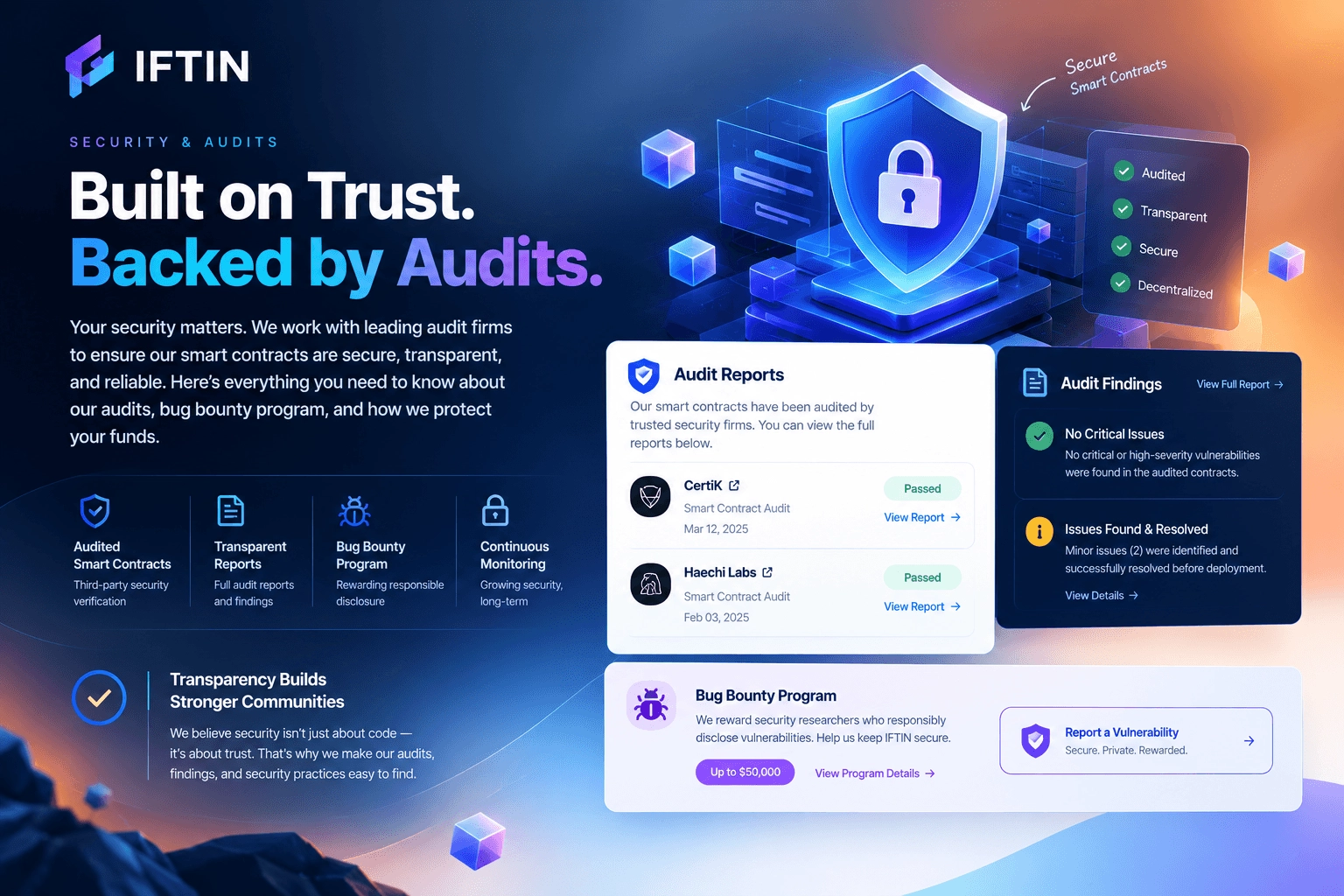
This page exists on almost no Web3 websites and should exist on every one that handles user funds.
The information belongs somewhere prominent and easy to find: which firms audited the contracts, when the audits were conducted, links to the full audit reports, what issues were found and how they were addressed, and what the current bug bounty program covers and how to report vulnerabilities.
Hiding this information doesn’t protect you. Sophisticated users will find the audit reports regardless. Making them easy to find signals that you want people to read them — which is the correct signal for a project that takes security seriously.
If you haven’t been audited, say so and explain why — whether it’s cost, timeline, or a deliberate choice to deploy on testnet first. Silence on security reads as evasion.
Blog
The blog on a Web3 website serves a different purpose than most marketing blogs. It’s less about SEO content and more about demonstrating that the team thinks clearly about hard problems.
The posts that perform best for Web3 projects are not listicles or SEO articles. They’re technical deep dives into protocol design decisions, honest post-mortems when things go wrong, governance proposal analyses, and ecosystem commentaries that show the team has a point of view.
Frequency matters less than consistency. A blog with one post per month for two years signals more organizational health than a blog with twelve posts in the first month and nothing since.
Contact and Community
This page needs to exist and it needs to be current. Nothing undermines credibility faster than a contact page with a broken form, a Discord invite that’s expired, or a Telegram link that goes to a dead group.
List your actual community channels. If Discord is where your community lives, put the Discord link first. If governance happens in a forum, link the forum. If you have a security contact for responsible disclosure, make it findable.
Keep this page simple. A list of working links to the places your community actually exists is more useful than an elaborate contact form that nobody monitors.
Essential Web3 Startup Website Pages: The Bottom Line
A Web3 website that covers these pages well is doing something more than information architecture. It’s making a statement about how the organization operates — that it communicates clearly, updates its public information when things change, and treats visitors as adults capable of evaluating the project on its merits.
The projects that skip the hard pages — governance, security, honest tokenomics — usually do so because those pages require the most work and reveal the most about how the project actually functions. That’s precisely why they matter.
Build the website you’d want to find if you were evaluating the project from the outside.
Want to go deeper? Read our guides on Startup Landing Page Best Practices for Web3 Projects, How to Create a DAO Website Using WordPress FSE, and Why Block Themes Are Perfect for Web3 Landing Pages.